sign up

like our page on facebook

Saturday, August 10, 2013

obesity and its effect on our health.

obesity " overweight"
Obesity is a medical condition in which excess body fat has accumulated to the extent that it may have an bad effect on health, leading to reduced life expectancy and/or increased health problems.People are considered obese when their body mass index (BMI), a measurement obtained by dividing a person's weight in kilograms by the square of the person's height in metres, exceeds 30 kg/m2
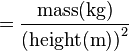
      
= \frac{\text{mass}(\text{kg})}{\left(\text{height}(\text{m})\right)^2}\mathrm{BMI}
   
Obesity is amongst the leading factors behind death throughout the world. Large-scale european and American studies get that death risk is lowest with a BMI of 20–25 kg/m2 in non-smokers as well as at 24–27 kg/m2 in current smokers, with chance increasing in conjunction with changes in either way. Some sort of BMI preceding 32 kg/m2 may be of a doubled death rate involving women more than a 16-year. In the united states obesity is estimated  to cause 111, 909  to 365, 000 deaths per year,  though 1 million (7. 7%) of deaths in Europe are attributed to excess fat.  Normally, obesity reduces life span by six to eight years, a new BMI of 30–35 kg/m2 reduces life span by two to four years,  though severe weight problems (BMI > 40 kg/m2) reduces life span by 10 years

sugar " diabetes mellitus"

sugar "diabetes mellitus" avoidance and treatment


Diabetes mellitus, or simply sugar, is a group of metabolic diseases in which a person has high blood sugar, either because the pancreas does not produce enough insulin, or because cells do not respond to the insulin that is produced. This high blood sugar produces the classical symptoms of polyuria (frequent urination), polydipsia (increased thirst) and polyphagia (increased hunger).

There are three main types of diabetes mellitus"DM"

    Type 1 DM results from the body's failure to produce insulin, and currently requires the person to inject insulin or wear an insulin pump. This form was previously referred to as "insulin-dependent diabetes mellitus" (IDDM) or "juvenile diabetes".
    Type 2 DM results from insulin resistance, a condition in which cells fail to use insulin properly, sometimes combined with an absolute insulin deficiency. This form was previously referred to as non insulin-dependent diabetes mellitus (NIDDM) or "adult-onset diabetes".
    The third main form, gestational diabetes occurs when pregnant women without a previous diagnosis of diabetes develop a high blood glucose level. It may precede development of type 2 DM

our page

‎‎منشور‎ by Medicine online.‎

Popular Posts