obesity " overweight"

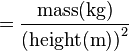
Obesity is a medical condition in which excess body fat has accumulated to the extent that it may have an bad effect on health, leading to reduced life expectancy and/or increased health problems.People are considered obese when their body mass index (BMI), a measurement obtained by dividing a person's weight in kilograms by the square of the person's height in metres, exceeds 30 kg/m2

Obesity is amongst the leading factors behind death throughout the world. Large-scale european and American studies get that death risk is lowest with a BMI of 20–25 kg/m2 in non-smokers as well as at 24–27 kg/m2 in current smokers, with chance increasing in conjunction with changes in either way. Some sort of BMI preceding 32 kg/m2 may be of a doubled death rate involving women more than a 16-year. In the united states obesity is estimated to cause 111, 909 to 365, 000 deaths per year, though 1 million (7. 7%) of deaths in Europe are attributed to excess fat. Normally, obesity reduces life span by six to eight years, a new BMI of 30–35 kg/m2 reduces life span by two to four years, though severe weight problems (BMI > 40 kg/m2) reduces life span by 10 years
The main treatment for obesity consists of dieting and physical exercise.Diet programs may produce weight loss over the short term, but maintaining this weight loss is frequently difficult and often requires making exercise and a lower food energy diet a permanent part of a person's lifestyle. Success rates of long-term weight loss maintenance with lifestyle changes are low, ranging from 2–20%. Dietary and lifestyle changes are effective in limiting excessive weight gain in pregnancy and improve outcomes for both the mother and the child.]
One medication, orlistat (Xenical), is currently widely available and approved for long term use. Weight loss however is modest with an average of 2.9 kg (6.4 lb) at 1 to 4 years and there is little information on how these drugs affect longer-term complications of obesity. Its use is associated with high rates of gastrointestinal side effects[148] and concerns have been raised about negative effects on the kidneys. Two other medications are also available. Lorcaserin (Belviq) results in an average 3.1 kg weight loss (3% of body mass) greater than placebo over a year. A combination of phentermine and topiramate (Qsymia) is also somewhat effective.
The most effective treatment for obesity is bariatric surgery. Surgery for severe obesity is associated with long-term weight loss and decreased overall mortality. One study found a weight loss of between 14% and 25% (depending on the type of procedure performed) at 10 years, and a 29% reduction in all cause mortality when compared to standard weight loss measures. However, due to its cost and the risk of complications, researchers are searching for other effective yet less invasive treatments..
The main treatment for obesity consists of dieting and physical exercise.Diet programs may produce weight loss over the short term, but maintaining this weight loss is frequently difficult and often requires making exercise and a lower food energy diet a permanent part of a person's lifestyle. Success rates of long-term weight loss maintenance with lifestyle changes are low, ranging from 2–20%. Dietary and lifestyle changes are effective in limiting excessive weight gain in pregnancy and improve outcomes for both the mother and the child.]
One medication, orlistat (Xenical), is currently widely available and approved for long term use. Weight loss however is modest with an average of 2.9 kg (6.4 lb) at 1 to 4 years and there is little information on how these drugs affect longer-term complications of obesity. Its use is associated with high rates of gastrointestinal side effects[148] and concerns have been raised about negative effects on the kidneys. Two other medications are also available. Lorcaserin (Belviq) results in an average 3.1 kg weight loss (3% of body mass) greater than placebo over a year. A combination of phentermine and topiramate (Qsymia) is also somewhat effective.
The most effective treatment for obesity is bariatric surgery. Surgery for severe obesity is associated with long-term weight loss and decreased overall mortality. One study found a weight loss of between 14% and 25% (depending on the type of procedure performed) at 10 years, and a 29% reduction in all cause mortality when compared to standard weight loss measures. However, due to its cost and the risk of complications, researchers are searching for other effective yet less invasive treatments..


No comments:
Post a Comment